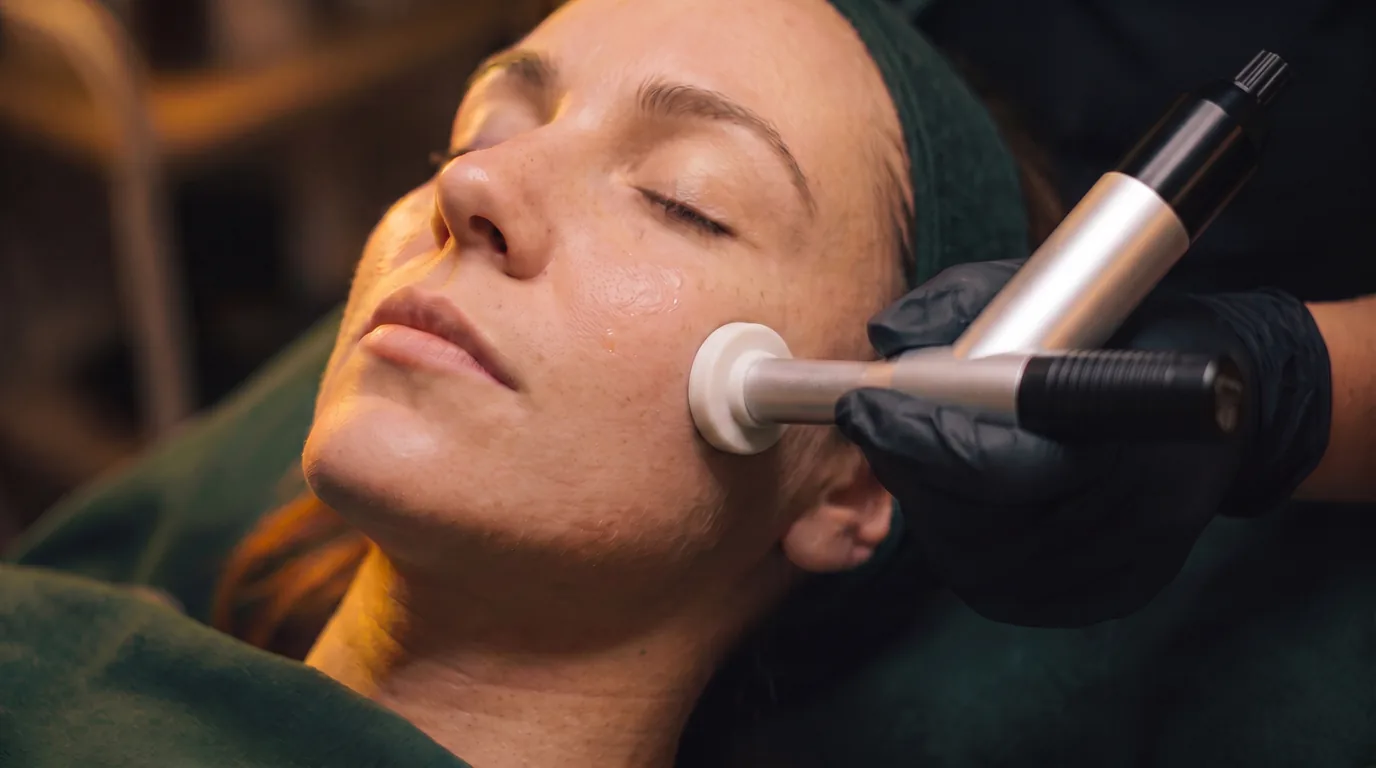
Microneedling is one of the most requested skin treatments I do, and one of the most misread. It is not a facial, and it is not magic. It is a way of asking your own skin to rebuild itself. Here is what it actually does, who it suits, and how to get the most out of a session in the Salt Lake Valley.
If you have been scrolling before-and-afters and wondering whether microneedling would do anything for your skin, this is written for you. I will walk through what the treatment is, what it can and cannot change, how to prepare so your skin responds well, and how to care for it in the days after. No hype, no scare tactics, just the version I give clients before they book.
Everything here is shared for education only — a cosmetic, appearance-focused perspective, not medical advice, diagnosis, or treatment of any condition.
What microneedling actually is
Microneedling uses a device fitted with very fine, sterile needles to create controlled micro-channels in the surface layers of the skin. Those tiny channels are small, deliberate signals. The skin reads them as something to repair, and repair is where the results come from.
The formal name is collagen induction. When the skin closes those micro-channels, it lays down fresh collagen and elastin — the two proteins that keep skin firm, smooth, and resilient. So the treatment is less about the needles and more about what your skin does in the weeks after them. You are not depositing a result onto the skin. You are prompting the skin to build one.
That is also why microneedling is a cosmetic, surface-level treatment in a licensed esthetician's hands. I work at a depth meant to refine skin quality and appearance, cleanse and prep the skin properly, and use single-use sterile cartridges every time. The point is a controlled, appearance-focused refresh, not an aggressive procedure.
What microneedling can improve
Because it works by rebuilding collagen, microneedling is best understood as a texture-and-tone treatment. It tends to help most with the things that live in the surface and quality of the skin, including the appearance of:
- Rough or uneven texture and general dullness
- Enlarged-looking pores
- Fine lines, especially in the cheeks and around the eyes and mouth
- Shallow, soft acne marks and uneven surface tone
- Skin that has started to feel less firm or less bouncy than it used to
Many clients also notice that their skincare works better afterward. Freshly rebuilt skin absorbs and uses well-formulated products more efficiently, so the serums you already own tend to earn their keep in the month after a session.
One honest note on expectations: microneedling rewards patience. You may see a glow within a week, but the real change — smoother texture, more even tone, firmer-feeling skin — builds quietly over four to six weeks as collagen matures, and compounds across a series.
What it will not do, and who should wait
Microneedling is a skin-quality treatment, not a sculpting one. It refines the surface. It does not lift the deeper architecture of the face or soften the held muscular tension that pulls features downward — that is a different kind of work. If your concern is contour, jaw tension, or midface heaviness, the honest answer is that microneedling is the wrong tool, and I would point you toward hands-on fascia work instead. Skin quality and facial architecture are two separate conversations, and it helps to know which one you are actually having.
There are also times to wait or to check with your own provider first. As a cosmetic treatment, microneedling is best postponed if any of the following apply:
- Active acne breakouts, cold sores, eczema, or any open or irritated skin in the treatment area
- A current skin infection or recent sunburn
- Pregnancy, where elective treatments are best cleared with your provider
- Recent use of certain prescription acne medications, or a history of keloid scarring
- Very recent injectables or resurfacing — timing matters, so tell me what you have had and when
None of this is meant to worry you. I review skin history at the start of every appointment precisely so the treatment lands on skin that is ready for it.
The best way to know whether microneedling suits your skin is a proper look in person. Book a consultation and I will map skin quality and facial architecture honestly before recommending anything.
Reserve a ConsultationWhat a session actually feels like
A first appointment starts with a conversation and a good look at your skin, not the device. Once I have agreed with you on the plan, the skin is thoroughly cleansed and a numbing cream is applied. That cream needs about twenty to thirty minutes to take full effect, so the session is unhurried by design.
The treatment itself is quick by comparison. Most clients describe the sensation as a light prickle or a fine sandpaper feeling, more noticeable over bonier areas like the forehead and jawline and barely there across the cheeks. It is very manageable, and the numbing does most of the work. Afterward I apply a calming, appropriate serum and send you out with clear aftercare.
Expect your skin to look flushed, a little warm, and faintly sun-kissed for the rest of the day and often into the next. That redness is not damage. It is the visible sign that the collagen signal landed. For most people it settles within twenty-four to forty-eight hours.
How to prepare for your appointment
A little preparation makes a real difference in how your skin responds and how smoothly it recovers. In the days before your session:
- Pause retinoids, strong acids, and exfoliating scrubs for about three to five days beforehand, unless I tell you otherwise
- Keep the treatment area out of strong sun, and never come in with a fresh tan or sunburn
- Hydrate well in the days leading up — well-hydrated skin responds better
- Arrive with a bare, product-free face if you can, and let me know if you are prone to cold sores
- Tell me about any recent facials, peels, injectables, or new prescriptions so I can time things correctly
If you are ever unsure whether something in your routine should pause, ask me before the appointment rather than guessing. A quick message saves a rescheduled session.
Aftercare: the first seventy-two hours
The window right after microneedling is when your skin is doing its quiet rebuilding, so the goal is simple: keep it calm, clean, and protected. For the first two to three days:
- Cleanse gently with lukewarm water and a mild, non-active cleanser — nothing scrubby
- Keep skin hydrated with the simple, soothing products I recommend
- Wear broad-spectrum SPF daily and stay out of direct sun; fresh skin burns easily
- Hold off on retinoids, acids, vitamin C, and exfoliants for several days until I clear them
- Skip heavy workouts, saunas, hot tubs, and pools for at least twenty-four to forty-eight hours
- Leave makeup off for about twenty-four hours to let the channels close undisturbed
Some light flaking or a temporary tight feeling over the following days is normal as the surface renews. Let it run its course rather than picking or over-exfoliating, and your skin will thank you for the restraint.
How many sessions, and what to pair it with
Because microneedling builds on collagen that matures over weeks, it works best as a short series rather than a one-off. For most skin goals I suggest a series of three to six sessions spaced roughly four to six weeks apart, then occasional maintenance to hold the results. One session gives you a genuine refresh; a series is where the smoother texture and firmer feel really settle in.
It also pairs well with the rest of a considered routine. For pure surface polish and glow between microneedling sessions, a resurfacing treatment like my Aqua Peel keeps the skin bright without overlapping the same collagen work. And if your goals include contour and facial tension alongside skin quality, I often combine skin treatments with sculpting sessions so both the surface and the architecture get attention. You can see the full menu on my services page.
Booking microneedling in Murray and Salt Lake City
Altru Radiance is located in Murray, Utah, near Fashion Place Mall, serving the Salt Lake Valley including Murray, Millcreek, Holladay, Sandy, Cottonwood Heights, Draper, and Salt Lake City. Microneedling is performed by a licensed master esthetician, with single-use sterile cartridges and a skin review at every visit.
If you are weighing it up, the easiest first step is to come in and talk it through. Learn more about the treatment on my microneedling service page, or reserve a time and I will build the plan around your skin.
Ready to rebuild your skin from the inside out? Book microneedling at Altru Radiance in Murray, UT.
Reserve Your SessionCommon questions about microneedling
Does microneedling hurt?
Most clients find it very manageable. A numbing cream is applied and given twenty to thirty minutes to take effect before I begin, so the sensation is usually a light prickle or fine sandpaper feeling rather than pain. It tends to be more noticeable over bonier areas like the forehead and jawline.
How much downtime is there?
Very little. Expect redness, warmth, and a faint sun-kissed look for the rest of the day and often into the next, usually settling within twenty-four to forty-eight hours. Light flaking over the following days is normal. Most people return to routine right away, with makeup left off for about a day.
How many sessions will I need?
For most skin goals I suggest a series of three to six sessions spaced about four to six weeks apart, then occasional maintenance. One session gives a real refresh, but the smoother texture and firmer feel build across a series as collagen matures.
How much does microneedling cost in Salt Lake City?
Cost varies with the number of sessions and whether you book a single treatment or a series. Current pricing and any new-client options are listed on the Altru Radiance booking page, and I am happy to walk you through it at your consultation.