Most facial treatments work on the surface — cleansing, exfoliating, infusing serums into the skin's outer layers. Buccal massage is different. It works from the inside out, accessing facial muscles and fascial tissue that no topical product or external manual technique can fully reach. At Altru Radiance, it is the technique the Restorative Buccal Facial is built around.
Everything here is shared for education only — a cosmetic, appearance-focused perspective, not medical advice, diagnosis, or treatment of any condition.
If you've heard of buccal massage and wondered what it actually is — or why it involves the inside of the mouth — this article answers everything: how it works anatomically, what a session feels like, who it's best for, and what kind of results you can realistically expect.
What is buccal massage, exactly?
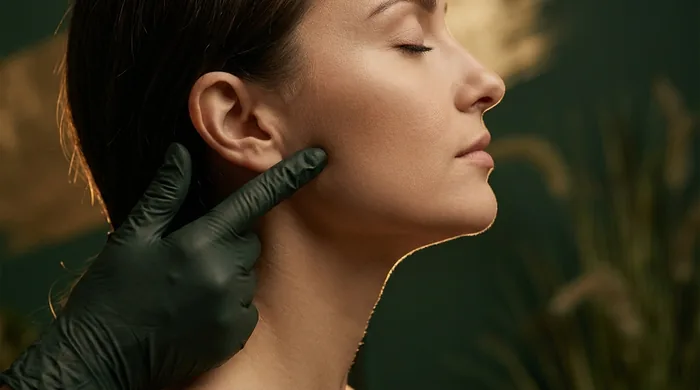
Buccal massage — also called buccal manipulation — is a manual facial technique in which I, wearing sterile gloves, work both outside and inside the cheeks to manipulate the deep muscles, fascia, and connective tissue of the face. The word "buccal" refers to the cheek: from the Latin bucca.
Unlike a standard facial release that works from the outside in, buccal massage accesses the interior surface of the cheek to reach muscles and fascial layers that are otherwise inaccessible. This is what makes it different in kind from every other facial modality — it's not working on the skin's surface, it's working on the architectural layer beneath it.
At Altru Radiance, buccal massage is always performed as part of a comprehensive treatment — my Restorative Buccal Facial runs approximately 90 minutes and includes external lymphatic drainage, sculpting work, and skin care, so the internal component is integrated into a whole-picture approach to facial aesthetics.
The technique has roots in manual practice. What's shifted is the refinement of it as an aesthetic and wellness modality, and the growing evidence base for how fascial tension patterns in the face affect both appearance and comfort.
The muscles you can't reach from the outside
To understand why buccal massage produces results that external surface work can't replicate, you need to know which muscles are involved — and why their location matters.
- Buccinator The thin, flat muscle that forms the wall of the cheek. It defines cheek hollows and facial contour, and is directly accessed through the internal technique. Chronic tension here contributes to a flat, compressed appearance in the mid-face.
- Masseter The primary chewing muscle — one of the most powerful in the human body relative to its size. In most adults, it carries significant tension from stress and habitual facial expressions. Masseter heaviness from overuse can widen and square the jaw. Working with it supports a more defined jaw line and a sense of openness through the face and neck.
- Medial & Lateral Pterygoids Muscles connecting the jaw to the skull, responsible for much of the complex movement of the temporomandibular joint. The medial pterygoid is one of the muscles best reached from inside the cheek — and it shapes how the lower face holds its expression. Buccal massage works with these muscles to support a softer, more rejuvenated look.
- Fascia The connective tissue network that runs between and around all these muscles. Fascial adhesions — areas where connective tissue has become restricted — contribute to asymmetry, heaviness, and downward pull on facial features over time. Buccal massage addresses these restrictions directly.
There's a fourth dimension to this anatomy that rarely gets discussed in aesthetics: breathing habit. When the jaw is held slightly open out of habit, the masseter stays engaged to maintain that position rather than resting. The tongue drops away from the palate, and the midface loses some of the support it would otherwise have. Over years this changes the balance of forces the face lives in — often visible as a flatter midface, more width through the jaw, and a heavier-looking lower face that most people attribute purely to time. Softening the held tension buccal massage supports is one side of the equation; becoming aware of the breathing habits that recreate that tension is the other.
When these muscles are habitually contracted — the default for many adults living with stress and long hours at a screen — the overlying facial tissue tends to be drawn downward and inward over time. That drag is a significant driver of what is typically attributed to "aging": jowl formation, flattened cheekbones, a squared or heavy jaw, and loss of overall facial lift.
How is it different from a regular facial or surface treatment?
A conventional facial works on the skin and its surface layers: cleansing, exfoliating, applying active ingredients, and manipulating the surface with strokes that affect the superficial muscles and lymphatic system. This is valuable — and at Altru Radiance I integrate excellent skin care into every treatment — but it has a ceiling in terms of visible lift and contour.
Think of it this way: a regular facial is like painting a wall. It makes the surface look better, and it can do that very effectively. Buccal massage is like working on the framing behind the wall — addressing what's pulling the paint out of place to begin with.
Standard surface facial work also has a mechanical limitation: the muscles that most need releasing are too deep or positioned too far inside the face to be fully addressed from the outside. You can soften the masseter somewhat from the outside of the jaw. You cannot reach the medial pterygoid at all. You cannot access the interior surface of the buccinator. Buccal massage removes those anatomical barriers.
This is also why buccal massage is distinct from jaw exercises, jade rollers, gua sha, or facial cupping — all tools that work at the surface or mid-tissue level. They have their place, but they're working with different constraints.
What does a buccal massage session actually feel like?
First-timers often have one primary concern: the idea of working inside the mouth. Let's address that directly.
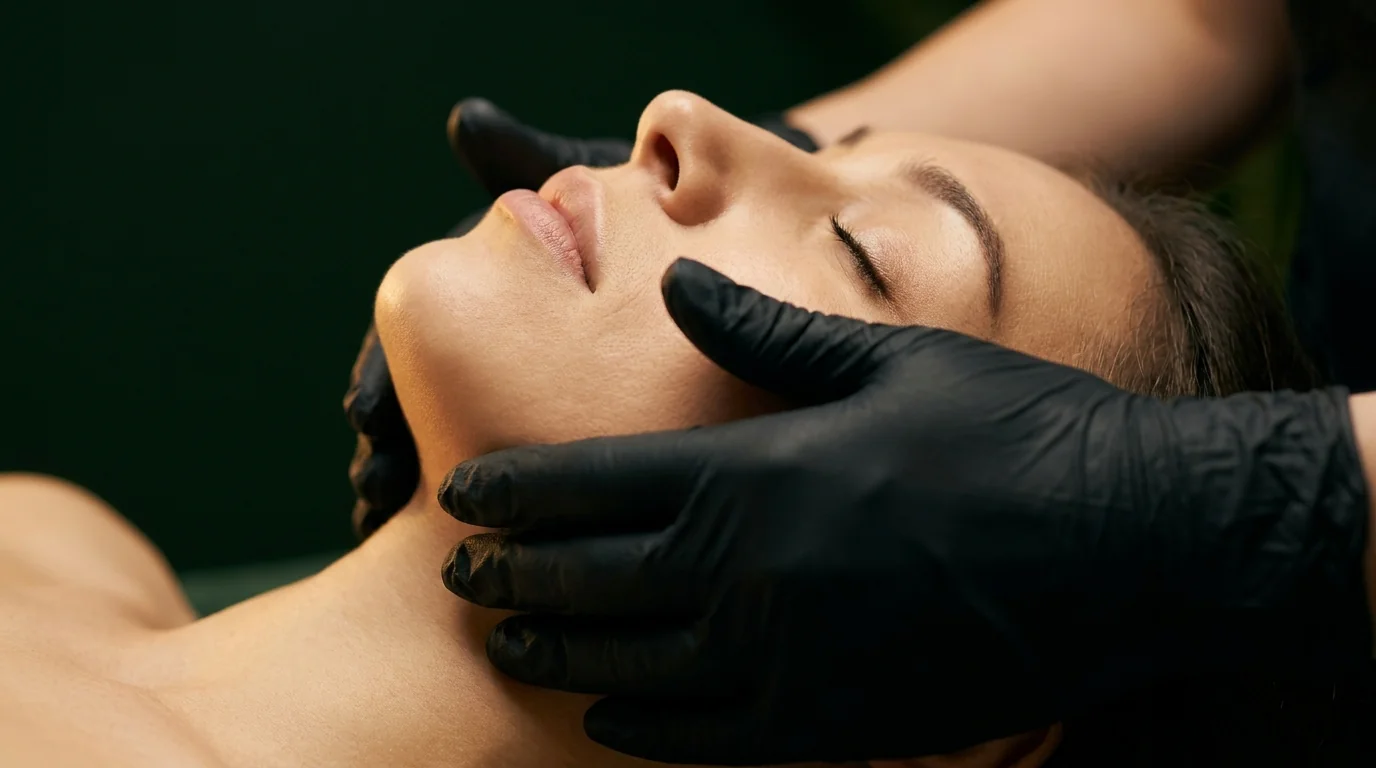
At the start of your session at Altru Radiance, I begin with a brief consultation and skin assessment. Before any internal work begins, the treatment opens with external lymphatic drainage and warm-up release to soften the tissue, settle the body, and prepare the deeper tissue of the cheek and jaw. This external work feels deeply relaxing — most clients describe it as one of the most relaxing hands-on treatments they've experienced before I've even started the internal work.
When the buccal portion begins, I put on sterile gloves and begin working gently on the interior surface of the cheek, starting with very light pressure that gradually increases as the tissue releases. The sensation is pressure — sometimes significant, especially in areas of high tension — but it should not be painful. Most clients describe it as a profound sense of release, particularly in the jaw and cheeks, often accompanied by a feeling of warmth and increased circulation.
What to expect during vs. after your session
During: Deep pressure and warmth in the cheek and jaw area. Occasionally, clients notice an emotional shift as held tension begins to soften — this is a normal response and passes quickly. You may notice a sense of openness in the lower face as the work continues.
Immediately after: Some temporary redness or flushing in the cheeks — this is a sign of lymphatic activation and healthy circulation response, not irritation. It typically resolves within 30–60 minutes. Most clients feel an immediate sense of lightness and ease in the jaw and neck.
24–48 hours: The lymphatic drainage response continues working after you leave the studio. Puffiness continues to reduce, and the lifting effect often becomes more visible over the 48 hours following your session as fluid redistribution continues.
Day 3 and beyond: Clients typically report increased cheekbone definition, a softer jaw, improved skin luminosity, and — for those carrying jaw tension — a noticeable softening of that baseline tightness. The face often reads more open for several days.
Who is buccal massage best suited for?
Buccal massage is an effective option for a wider range of concerns than most people realize. It's most commonly sought for aesthetic goals — the visible lift, jaw definition, and softening of facial heaviness that show up across a series of sessions.
- Those noticing early jowling or facial heaviness — buccal work supports a more lifted, defined appearance in the lower face
- Habitual jaw tension — over years, this reads in the lower face as widening, sharper masseter prominence, and the heavier, more set expression that ages the face faster than time alone
- Visible jaw tension that shows in the lower face — masseter heaviness, jaw-squaring patterns, or a more set expression
- Post-dental or orthodontic work — prolonged dental procedures often leave significant residual tension in the pterygoids and masseter
- Facial asymmetry — one-sided tension patterns in the jaw and cheek often contribute to visible facial asymmetry; softening these patterns allows the face to return toward balance
- Natural aging concerns — those seeking visible lift and facial tone without injections or surgery
- High-stress individuals — the jaw is one of the primary places the body carries tension; buccal work eases what shows up in the face
- Subtle midface changes over time — visible flattening, softer cheekbones, or a heavier lower face
How many sessions do you need to see results?
This is the question I get asked most often, and the answer surprises people: visible results after a single session are common. The temporary redness isn't the result — the lift, the jaw softening, and the drainage effects are, and clients typically notice those immediately.
That said, one session is a beginning, not a completion. The visible changes buccal work supports — softening held tension in the facial muscles, supporting fascial mobility, and restoring lymphatic flow — are cumulative. Like any hands-on work that addresses long-standing held tension, the tissue needs multiple sessions to change more durably.
At Altru Radiance, I recommend:
- A Welcome Bundle (two foundational sessions) for new clients to experience the work and establish a baseline
- A series of 3–6 sessions over 6–10 weeks for meaningful visible change — particularly for clients carrying visible jaw tension or facial heaviness
- Monthly maintenance sessions to sustain results and continue progressive improvement
Clients who commit to a series consistently report that the cumulative effect exceeds what any single session could produce — the tissue changes, the held tension diminishes, and the results become more stable between sessions.
Ready to experience what buccal massage can do for your face? Book a Restorative Buccal Facial at Altru Radiance in Murray, UT.
Reserve Your SessionIs buccal massage a natural alternative to injectables?
This is a question worth answering carefully, because the mechanisms are different — and understanding the difference helps you figure out which approach is right for your goals.
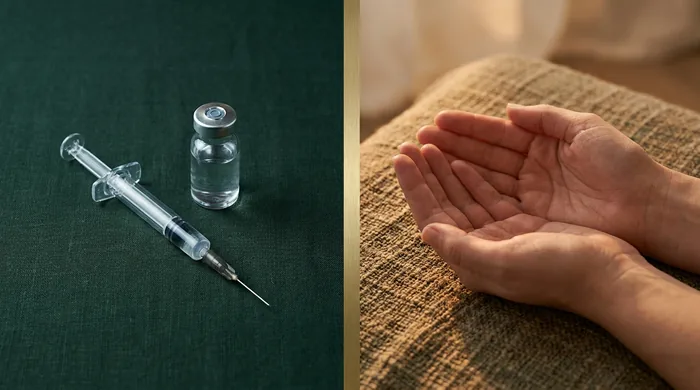
injectables works by temporarily blocking nerve signals to specific muscles, preventing them from contracting. For cosmetic purposes, it's most often used to reduce dynamic wrinkles (lines caused by repeated muscle movement) and, in the masseter, to reduce jaw bulk by atrophying the muscle over time.
Buccal massage works differently: it releases tension and fascial restriction without altering the muscle's underlying function. Rather than preventing movement, it restores healthy movement. Rather than thinning the masseter through atrophy, it releases hypertonicity so the muscle can return to its natural resting state.
For jaw tension and masseter concerns, buccal massage can achieve similar functional outcomes — jaw softening, reduced bulk over a series of treatments — through a different pathway. For lifting concerns, buccal massage works with the deeper layer behind facial descent rather than masking it temporarily.
If you're exploring this comparison in depth, my article on hands-first facial alternatives covers this alongside other modalities I offer, including microneedling with skin boosters, red light therapy, and lymphatic drainage.
Where to experience buccal massage in Murray & Salt Lake City
Altru Radiance is Murray, Utah's only dedicated regenerative aesthetics fascia studio — located near Fashion Place Mall, serving clients across the Salt Lake Valley including Murray, Millcreek, Holladay, Sandy, Cottonwood Heights, Draper, and Salt Lake City.
Mechelle is a licensed esthetician specializing in restorative buccal massage, facial architecture work, and lymphatic drainage. Every session at Altru Radiance begins with a thorough assessment and closes with a personalized care plan, so you leave with both the experience and the knowledge to support your results at home.
New clients are welcome. If you're new to buccal massage, the Welcome Bundle — two foundational sessions building on each other — is the most efficient way to begin.
Ready to experience what buccal massage can do for your face? Book a Restorative Buccal Facial at Altru Radiance in Murray, UT.
Reserve Your Session